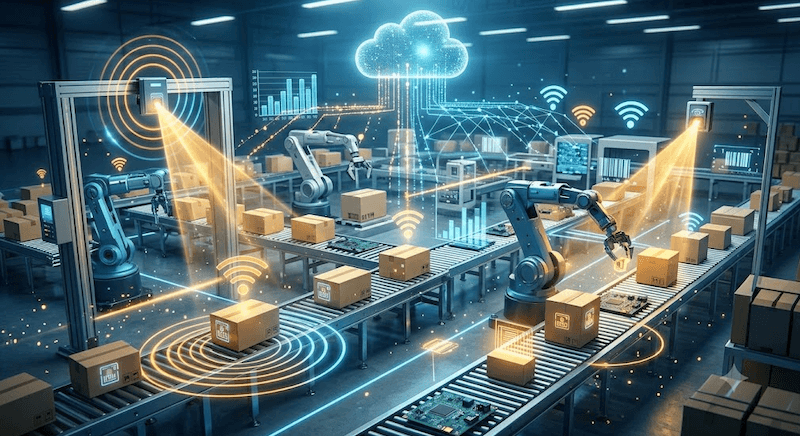
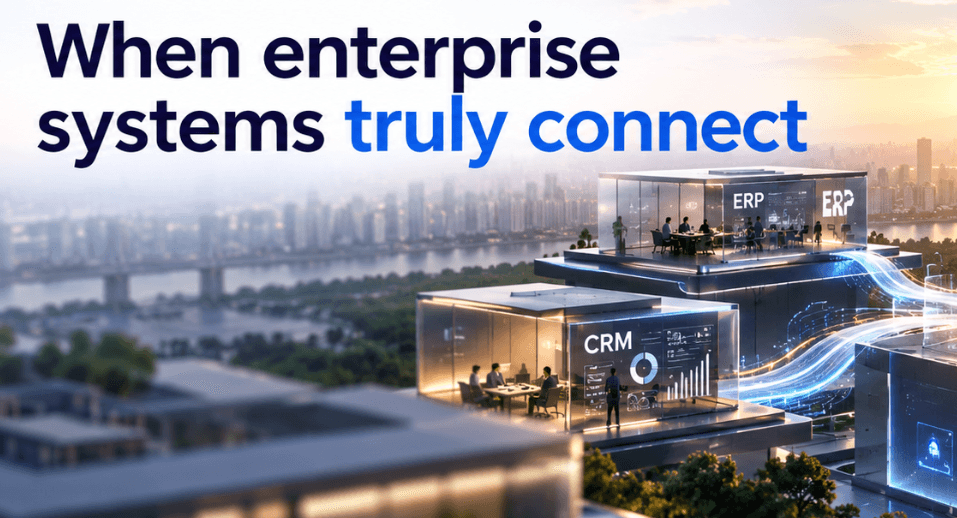
As a business grows, so does its number of systems: ERP for finance and accounting, CRM for sales, WMS for the warehouse, HR software, the website, e-commerce marketplaces… Each works well within its own scope, but the gaps between them are filled with Excel exports, imports and manual data entry.
The hidden cost of disconnected systems
- Duplicate and mismatched data across departments.
- Staff spending time re-entering the same information.
- Slow reports, with numbers that differ depending on the source.
- Difficulty extending a process or replacing one system without affecting the others.
Common integration patterns
Point-to-point integration works when there are only a few systems, but quickly becomes complex as connections multiply. A centralized API approach or an integration layer (middleware, iPaaS) manages data flows in one place, making them easier to monitor and change. For processes that need fast responses, an event-driven architecture lets systems react as soon as data changes.
Beyond internal integration, businesses increasingly need to connect with external services such as SAP, payment gateways, the VNeID electronic identity platform, eKYC verification and digital signatures to complete online processes.
Principles for sustainable integration
- Define a single source of truth for each data type: customers, products, employees…
- Standardize data models and shared master codes across systems.
- Design APIs with documentation, versioning and clear authentication.
- Handle errors and reconciliation: retries, logging and alerts when synchronization fails.
- Secure data access on a least-privilege basis.
Start from the business flow
Rather than trying to connect everything at once, pick one end-to-end business flow — for example, from order to delivery and invoice — and map which data needs to move where. Miagi Solution's system integration service starts by analyzing these flows, then designs the architecture and implements connections that fit the business's existing infrastructure.